


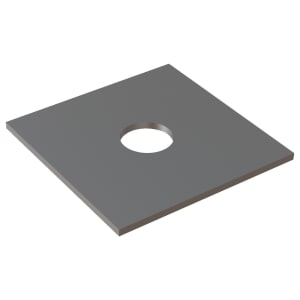


Prevent expensive repairs in future with our washers and threaded bars. Whether building, fixing or mounting, these parts are essential for secure fastenings and stable loads. We stock round, square, flat and penny washers in our collection.
Explore our washer and threaded bar collection to ensure reliable results in your next project. Washers are designed to spread loads across larger surface areas to avoid damage, pull through or loosening. Lengthening the lifespan of assemblies, they also support fasteners in their hold. Threaded bars are a versatile component that are commonly used for structural bracing, anchoring equipment, hanging, shelving, fencing and many other DIY projects. They can be cut to any length to ensure compatibility. These components together allow for strong, reliable and adjustable connections.
A penny washer is a type of washer with a larger outer diameter than standard washers. This is so they can spread the load of a bolt or screw over a wider area.
A flat washer is a type of washer with a thin, flat disc that has a hole in the centre to sit under a bold head or nut. They’re designed to distribute the load of a fastener over a larger surface area.
If you’re using both, the bolt head or nut goes first, then the spring washer, followed by the flat washer and finally the surface that’s being clamped. You’ll want the flat washer against the material itself to spread the load and for protection, while the spring washer should always sit between the flat washer and the fastener to prevent loosening.
Firstly, unscrew the nut from the threaded end – if you’re using one. Then slide the washer off the screw or bolt. If it’s stubborn to come off, try a penetrating oil, gently loosen it with pliers, or carefully pry it off with a flat head screwdriver.
When using a lock washer and a flat washer, you should use them in the order of bolt head or nut, lock washer, flat washer and the material. Your flat washer should sit against the surface to distribute load and protect the material, whereas the lock washer should be between the flat washer and fastener.


